
Baker’s Falls, Horton Plains: The Complete Visitor’s Guide
There is a moment on the Horton Plains hiking trail when the landscape changes almost without warning. The open grasslands gradually give way to a dense cloud forest, sunlight becomes filtered through towering trees draped in moss, and the cheerful chorus of birds is replaced by the unmistakable sound of rushing water somewhere ahead. A few more careful steps down a series of stone stairs, and Baker’s Falls reveals itself—powerful, refreshing, and beautifully framed by the surrounding wilderness.
In this complete guide, you’ll discover everything you need to know before visiting Baker’s Falls—from its fascinating history and the story behind its name to hiking tips, photography advice, wildlife, seasonal conditions, safety information, and the best times to experience one of Sri Lanka’s most iconic waterfalls.
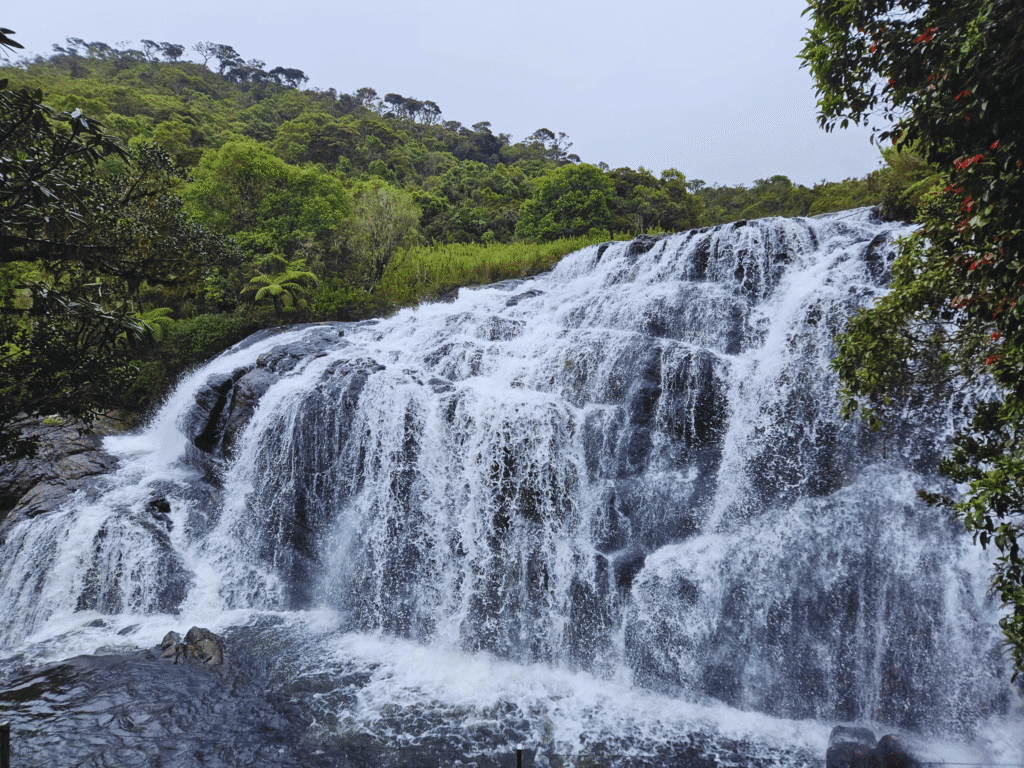
Table of Contents
What Is Baker’s Falls?
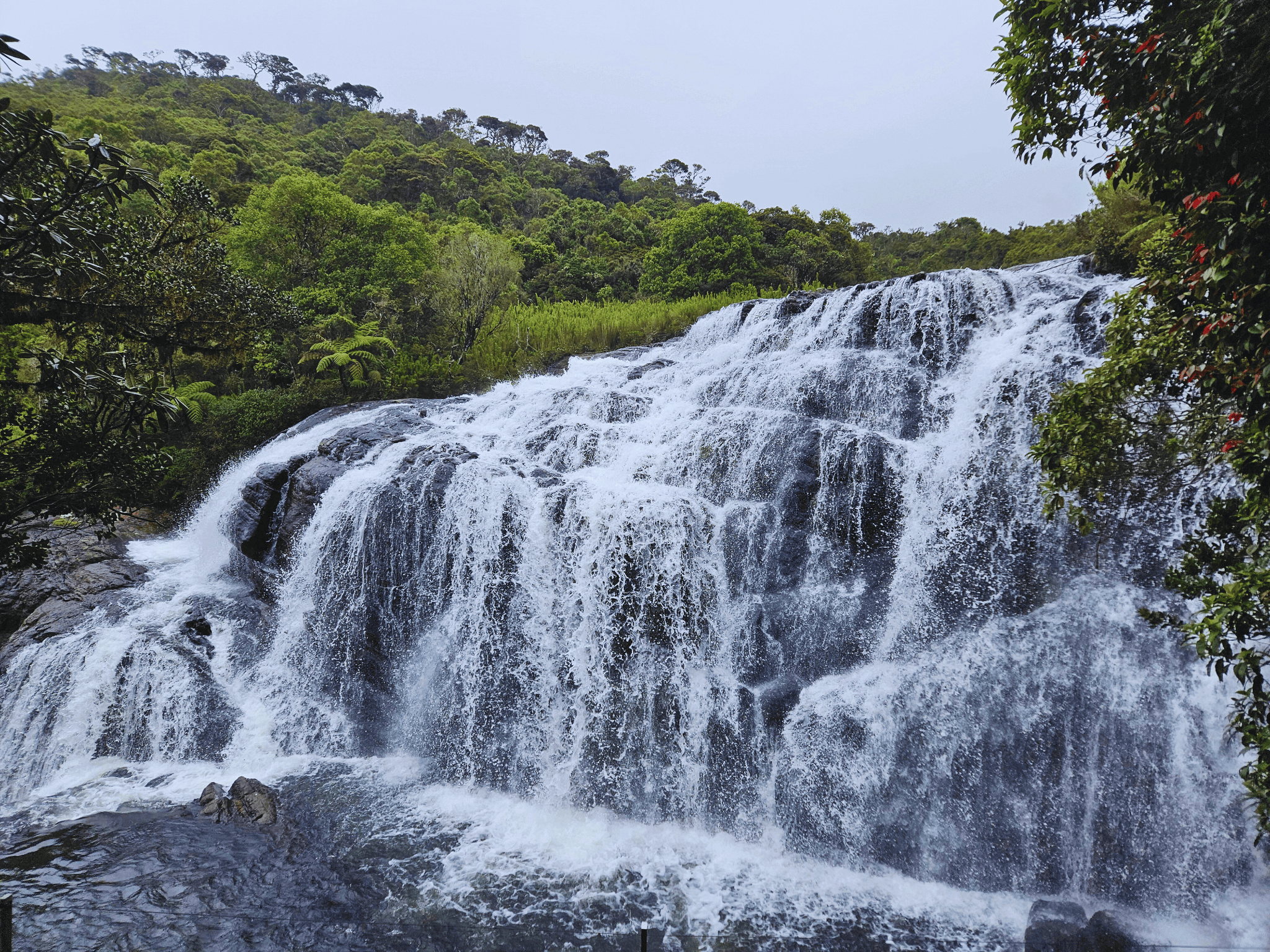
Baker’s Falls is a 20-meter-high cascade waterfall formed by the clear waters of Belihul Oya, a mountain stream that originates within Horton Plains. Rather than plunging vertically over a single cliff, the water flows gracefully over a series of rugged rock formations before crashing into a shallow pool below. This cascading flow gives the waterfall its distinctive appearance and creates the constant, soothing roar that visitors hear long before they actually see it.
Although it is not the tallest waterfall in Sri Lanka, its setting within the cloud forest gives it a character that is difficult to find elsewhere. The combination of rugged rock formations, year-round flowing water, and lush green surroundings creates a scene that feels untouched despite its popularity.
Before setting off on the trail, it’s helpful to know a few key facts about Baker’s Falls. Whether you’re planning your hiking time, deciding what to pack, or simply curious about the waterfall itself, this quick overview provides the essentials at a glance.
| Feature | Details |
|---|---|
| Name | Baker’s Falls |
| Sinhala Name | Gonagala Ella (ගෝනගල ඇල්ල) |
| Location | Horton Plains National Park, Nuwara Eliya District, Sri Lanka |
| Elevation | Approximately 2,000 meters (6,560 feet) above sea level |
| Water Source | Belihul Oya |
| Height | Approximately 20 meters (66 feet) |
| Waterfall Type | Cascade waterfall |
| Trail | Located along the famous World’s End circular hiking trail |
| Walking Time | Around 1.5–2 hours from the park entrance, depending on your pace and route |
| Difficulty | Easy to Moderate |
| Best Time to Visit | Early morning (7:00 AM–10:00 AM) |
| Best Season | December to April for clearer weather, although the waterfall flows year-round |
| Swimming | Not permitted and strongly discouraged |
| Photography | Excellent throughout the year, especially after light rainfall |
| Nearby Attractions | World’s End, Mini World’s End, Chimney Pool, Visitor Centre, Thotupola Kanda |
Why Is It Called Baker’s Falls?
Every famous natural landmark has a story behind its name, and Baker’s Falls is no exception. While most visitors know the waterfall by its English name, relatively few are aware of the history that connects this peaceful corner of Horton Plains to one of the most adventurous explorers of the nineteenth century.
Long before it became known as Baker’s Falls, the waterfall was locally called Gonagala Ella. In Sinhala, gona refers to a deer, while gala means rock. Although there are different interpretations of the name, many believe it was inspired by the abundance of deer that once frequented the area around the waterfall and its surrounding grasslands.
Even today, visitors hiking through Horton Plains often encounter sambar deer grazing peacefully near the trails, providing a glimpse into why the location may have earned its original name.
The waterfall’s modern name comes from Sir Samuel White Baker, a British explorer, hunter, engineer, and author who spent time in the central highlands of Sri Lanka during the mid-1800s. Baker was one of the many Europeans who developed a fascination with the island’s mountainous interior, which at the time remained relatively remote and difficult to access.
Samuel Baker’s connection to the area extends beyond the waterfall itself. He played a role in promoting the agricultural potential of Sri Lanka’s cool central highlands, particularly around Nuwara Eliya.
At a time when much of the region remained covered by forest and grassland, Baker was among those who recognized similarities between the climate of the highlands and that of parts of Europe. He experimented with farming and livestock breeding and became an advocate for developing the area as a settlement and agricultural center.
Although modern conservation perspectives differ significantly from the land-use practices of the colonial era, Baker’s activities contributed to the historical development of Nuwara Eliya and the surrounding highlands. As a result, several geographical features in the region became associated with his name, including the waterfall that visitors know today.
Historical records suggest that the waterfall was named in honor of Samuel Baker because of his close association with Horton Plains and the surrounding highlands during the British colonial period.
Over time, “Baker’s Falls” became the name most widely used on maps, guidebooks, and official records. Today, it remains the waterfall’s internationally recognized name, even though its older Sinhala name continues to hold cultural significance.
Location of Baker’s Falls
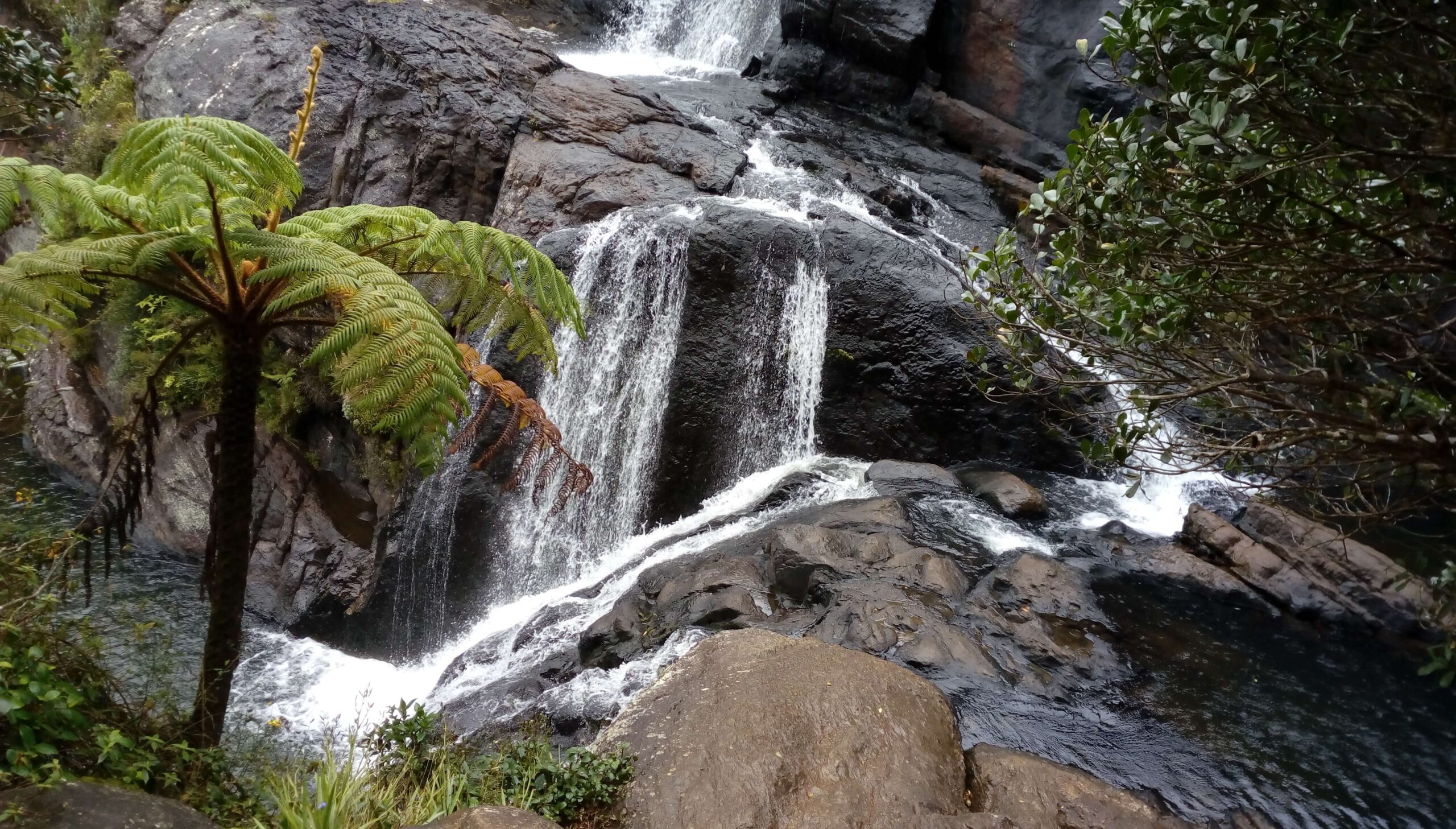
Unlike many waterfalls in Sri Lanka that can be reached by vehicle, visiting Baker’s Falls is part of the adventure itself.
Situated deep within Horton Plains National Park, Baker’s Falls lies along the park’s famous World’s End Circular Trail—the same loop that takes visitors to both World’s End and Mini World’s End. Almost everyone who completes the main hiking circuit passes the waterfall, making it one of the trail’s most popular and memorable stops.
Where Exactly Is Baker’s Falls?
Baker’s Falls is located in the southwestern section of Horton Plains National Park, within Sri Lanka’s Central Highlands. The waterfall is formed by Belihul Oya, one of the streams that originates on the Horton Plains plateau before flowing downhill and eventually contributing to the Walawe River basin.
The falls sit at an elevation of approximately 2,000 meters (6,560 feet) above sea level, making them one of the highest easily accessible waterfalls in Sri Lanka. This high elevation plays a significant role in creating the cool temperatures, frequent mist, and lush vegetation that define the area.
Approximate GPS Coordinates
- Latitude: 6.799° N
- Longitude: 80.807° E
While GPS navigation can help you locate the general area, it becomes unnecessary once you enter Horton Plains National Park. The hiking trail is clearly marked with direction signs, and visitors simply follow the designated circular route.
How Far Is Baker’s Falls from the Park Entrance?
The distance depends on which direction you choose to walk around the circular trail.
Most visitors begin by heading toward Mini World’s End and World’s End first before continuing to Baker’s Falls. This is the route recommended by park authorities because the viewpoints are usually clearest during the early morning before clouds roll in.
Following this clockwise route:
- Park Entrance to Baker’s Falls: 4.7 kilometers (2.9 miles)
- Walking Time: around 2 to 3 hours, depending on your pace and the number of stops along the way.
If you spend time enjoying the viewpoints, photographing wildlife, or taking breaks, the journey may take a little longer—and that’s perfectly normal. Horton Plains isn’t a place to rush.
Distance from Major Attractions
Knowing how Baker’s Falls fits into the overall hiking route can help you plan your visit more effectively.
| Attraction | Approximate Distance to Baker’s Falls |
|---|---|
| Horton Plains Visitor Centre | 3.5–4 km |
| Mini World’s End | 2.5 km |
| World’s End | 1.2 km |
| Trail Exit / End of Loop | About 2 km |
These distances are approximate but provide a good idea of where the waterfall sits along the main hiking circuit.
Finding Baker’s Falls on the Trail
One of the pleasant surprises about hiking in Horton Plains is how easy the trail is to follow. There are no confusing junctions or complicated route choices along the main circular path.
The trail is well-marked and forms part of the park’s popular circular hiking route. However, the final descent involves uneven stone steps that can become slippery, especially after rain, making sturdy footwear an essential part of the journey.
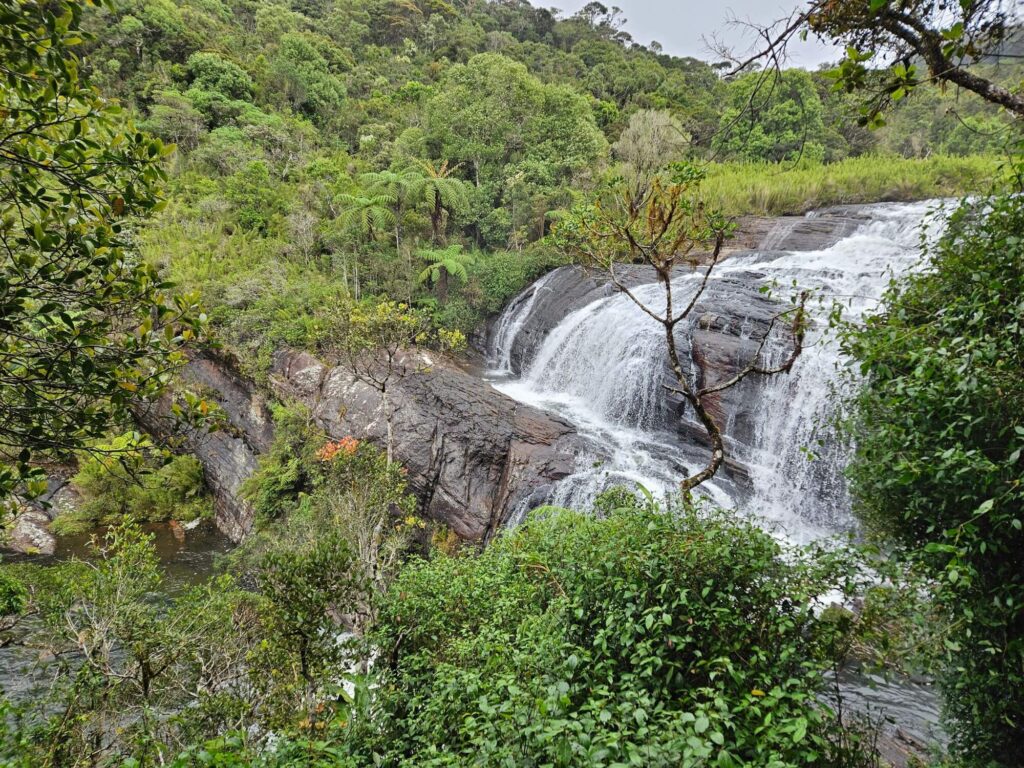
Fortunately, the descent is relatively short, and the effort is rewarded almost immediately as Baker’s Falls comes into view through the surrounding vegetation.
Unlike challenging mountain hikes that require specialized equipment or extensive preparation, reaching the waterfall is manageable for most people with a reasonable level of fitness.
Can You Reach Baker’s Falls by Vehicle?
No.
There is no road leading directly to Baker’s Falls, and private vehicles are not permitted beyond the designated parking area near the park entrance.
The only way to visit the waterfall is by walking the hiking trail, which starts from the Horton Plains Visitor Center.
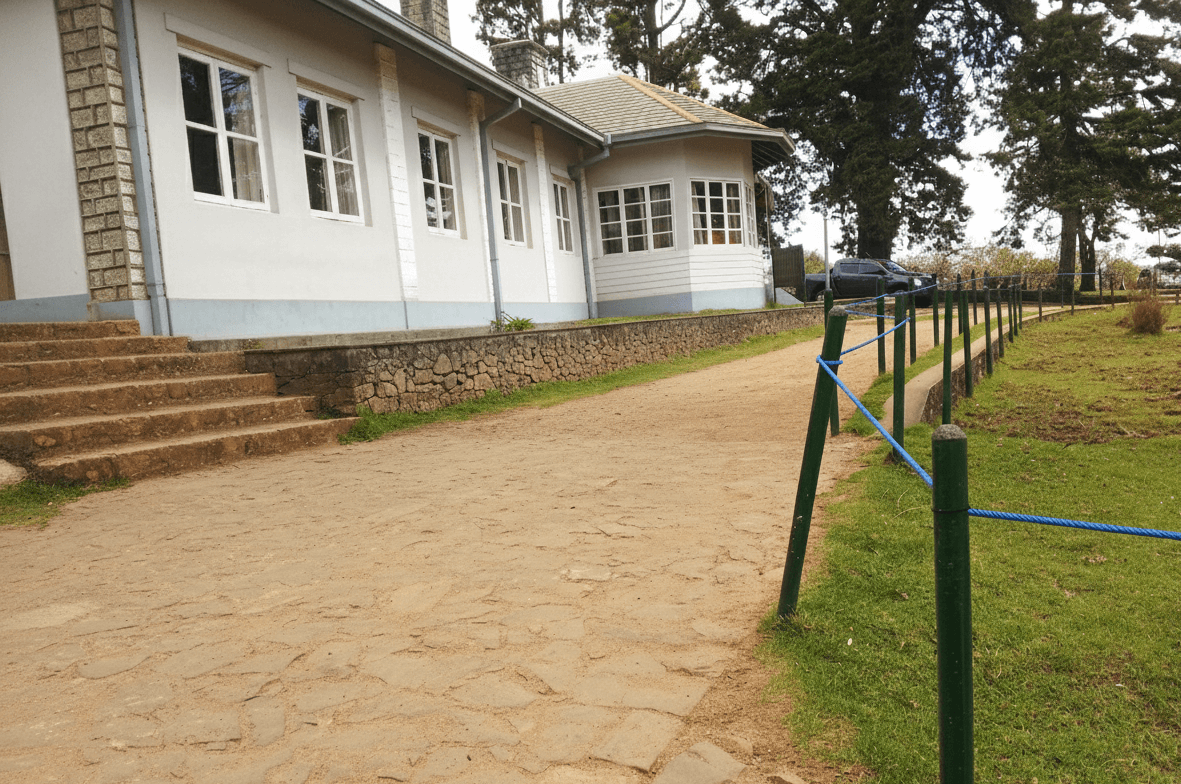
This is actually one of the reasons Baker’s Falls has retained so much of its natural beauty. Without vehicle access or commercial development nearby, the surrounding forest remains peaceful and remarkably well preserved. Instead of engine noise, visitors are accompanied by birdsong, the rustling of leaves, and eventually the soothing sound of cascading water.
For many hikers, this sense of immersion is one of the waterfall’s greatest attractions.
Best Time to Visit Baker’s Falls
One of the most common questions visitors ask is whether there’s a “perfect” time to visit Baker’s Falls. The honest answer is that the waterfall is beautiful throughout the year—but the experience can vary significantly depending on the season, the weather, and even the time of day.
Unlike some waterfalls in Sri Lanka that become little more than a trickle during extended dry periods, Baker’s Falls benefits from the unique climate of Horton Plains National Park. The surrounding cloud forest receives regular rainfall and mist, ensuring that the waterfall maintains a steady flow in every season. However, if you’re hoping for clear views, comfortable hiking conditions, or the best photographs, timing your visit can make a noticeable difference.
The Best Time of Day to Visit
If you’re planning a trip to Horton Plains, the answer is simple: arrive as early as possible.
The park officially opens in the morning, and experienced visitors often aim to begin their hike shortly after the gates open. This isn’t just to avoid crowds—it’s because the weather in Horton Plains changes rapidly as the day progresses.
During the early morning, the air is usually crisp, visibility is at its best, and the forest feels calm and peaceful. By the time you reach Baker’s Falls, the soft morning light filtering through the trees creates excellent conditions for photography while keeping the hike pleasantly cool.
As the morning advances, clouds often begin to build over the plateau. Although the waterfall remains impressive, the surrounding mist can reduce visibility and make photography more challenging.
Early Morning (6:00 AM – 9:00 AM)
If you can reach Baker’s Falls during this period, you’re likely to enjoy:
- Cooler temperatures
- Better natural lighting for photographs
- Fewer visitors
- Greater chances of seeing wildlife
- A quieter, more peaceful atmosphere
This is widely considered the ideal time to experience not only Baker’s Falls but Horton Plains as a whole.
Late Morning (9:00 AM – 11:00 AM)
This remains a pleasant time to visit, although conditions begin changing.
The trail becomes busier as more visitors arrive, and mist often starts drifting through the forest. While the cooler temperatures remain comfortable, the changing weather can affect visibility in some areas of the park.
For photographers, the softer, diffused light can actually create beautiful images of the waterfall by reducing harsh shadows.
Afternoon
By afternoon, Horton Plains often experiences thicker cloud cover and occasional rain showers.
The waterfall itself may appear even more dramatic as recent rainfall increases the water flow, but hiking conditions become wetter, and the stone steps leading to the viewing area can be slippery.
Unless you’re specifically hoping to experience the park in misty conditions, most visitors find the morning offers a more enjoyable experience.
Best Season to Visit Baker’s Falls
One of Baker’s Falls’ greatest advantages is that it remains attractive throughout the year. However, each season offers a slightly different experience.
December to April – The Best Overall Season
For most travelers, this is the ideal time to visit Horton Plains.
During these months, rainfall is generally lower, skies are often clearer in the mornings, and hiking conditions are at their most comfortable.
The trail is usually less muddy, making it easier to navigate, while the waterfall continues to maintain a healthy flow thanks to the highland climate.
This period is especially popular among photographers, nature lovers, and first-time visitors hoping to enjoy both World’s End and Baker’s Falls under favorable weather conditions.
May to September – Lush and Refreshing
As rainfall becomes more frequent, Horton Plains transforms into an even greener landscape.
Around Baker’s Falls, mosses become brighter, ferns flourish, and the surrounding forest appears exceptionally vibrant. The waterfall often carries a stronger volume of water, creating a more powerful cascade.
The trade-off is that hiking trails may be wetter, and mist is more common throughout the day.
For visitors who enjoy dramatic landscapes and don’t mind a little rain, this can be an incredibly rewarding time to visit.
October and November – The Wettest Period
These months usually receive the highest rainfall.
Heavy showers can occur with little warning, and dense cloud often covers large sections of the park.
Although Baker’s Falls is at its most powerful during this period, visibility at other attractions—particularly World’s End—can be limited.
If you’re visiting during these months, waterproof clothing and sturdy hiking shoes become essential.
Is Baker’s Falls Safe to Visit?
The short answer is yes. Baker’s Falls is considered one of the safest natural attractions within Horton Plains National Park, and thousands of visitors—including families with children and senior travelers—visit the waterfall every year without incident.
However, like any natural environment, it deserves respect.
Unlike urban parks or heavily developed tourist attractions, Baker’s Falls remains part of a protected wilderness. The terrain is uneven, weather conditions can change quickly, and the rocks surrounding the waterfall are naturally slippery. Understanding these conditions will help you enjoy your visit safely while protecting this fragile ecosystem.
The good news is that most accidents reported around waterfalls happen when visitors ignore warning signs or step beyond designated viewing areas. By following a few simple precautions, Baker’s Falls can be enjoyed safely by almost everyone.
Can You Swim at Baker’s Falls?
The simple answer is no.
Swimming at Baker’s Falls is not allowed, and it is strongly discouraged.
At first glance, the pool below the waterfall may appear calm, especially during periods of lower water flow. However, appearances can be misleading.
Several factors make swimming unsafe:
- Strong underwater currents near the falling water.
- Slippery rocks beneath the surface.
- Sudden increases in water flow after rainfall upstream.
- Uneven depths that are difficult to judge from the shore.
- Cold mountain water that can quickly reduce body temperature.
More importantly, Horton Plains National Park is a protected conservation area. Entering streams and pools can damage sensitive aquatic habitats and disturb wildlife that depends on these clean mountain waters.
For your safety—and to help preserve the environment—it’s best to admire the waterfall from the designated viewing area.
Mountain Weather Can Change Quickly
One characteristic of Horton Plains that surprises many first-time visitors is how rapidly the weather changes.
A bright, sunny morning can turn into cool mist within minutes. Light rain may arrive unexpectedly, making rocks and trails wetter than they were just moments before.
For this reason, it’s always a good idea to carry:
- A lightweight rain jacket.
- Shoes with good grip.
- A small waterproof cover for your camera or backpack.
Even if the weather forecast predicts sunshine, mountain conditions don’t always follow the forecast.
Leeches: Should You Be Concerned?
Leeches are sometimes present in Horton Plains, particularly after periods of rain.
The good news is that they’re generally more common on less-traveled forest paths than on the main hiking trail.
If you’re visiting during wet weather:
- Wear long socks.
- Check your shoes and lower legs occasionally.
- Carry a few tissues or wet wipes.
Most visitors either don’t encounter leeches at all or find only one or two during the hike. While they can be unpleasant, they’re rarely a serious concern.
As you explore this remarkable corner of Horton Plains National Park, remember that its beauty has endured because it has been carefully protected. Staying on marked trails, respecting wildlife, avoiding litter, and following park guidelines all help preserve this unique ecosystem for future generations.